
The Portal
The language--and how to speak it

Fáilte! (Welcome!)
Next week is my birthday! To celebrate I’m offering a 20% discount on all annual paying subscriptions through January 28th. Plus, get a chance to win the fun little book, Teach your Cat Irish. All paying subscribers (including gifted) can win via the Grá Mór raffle, February 1st. Thank you for reading and your generous support!
Also, our next clachan beo (community call) is Sunday, February 8th at 3pm EST/8pm IST. It’s open to all paying subscribers. Bígí linn—join us!
Now, for this week’s Gaelic Effect…
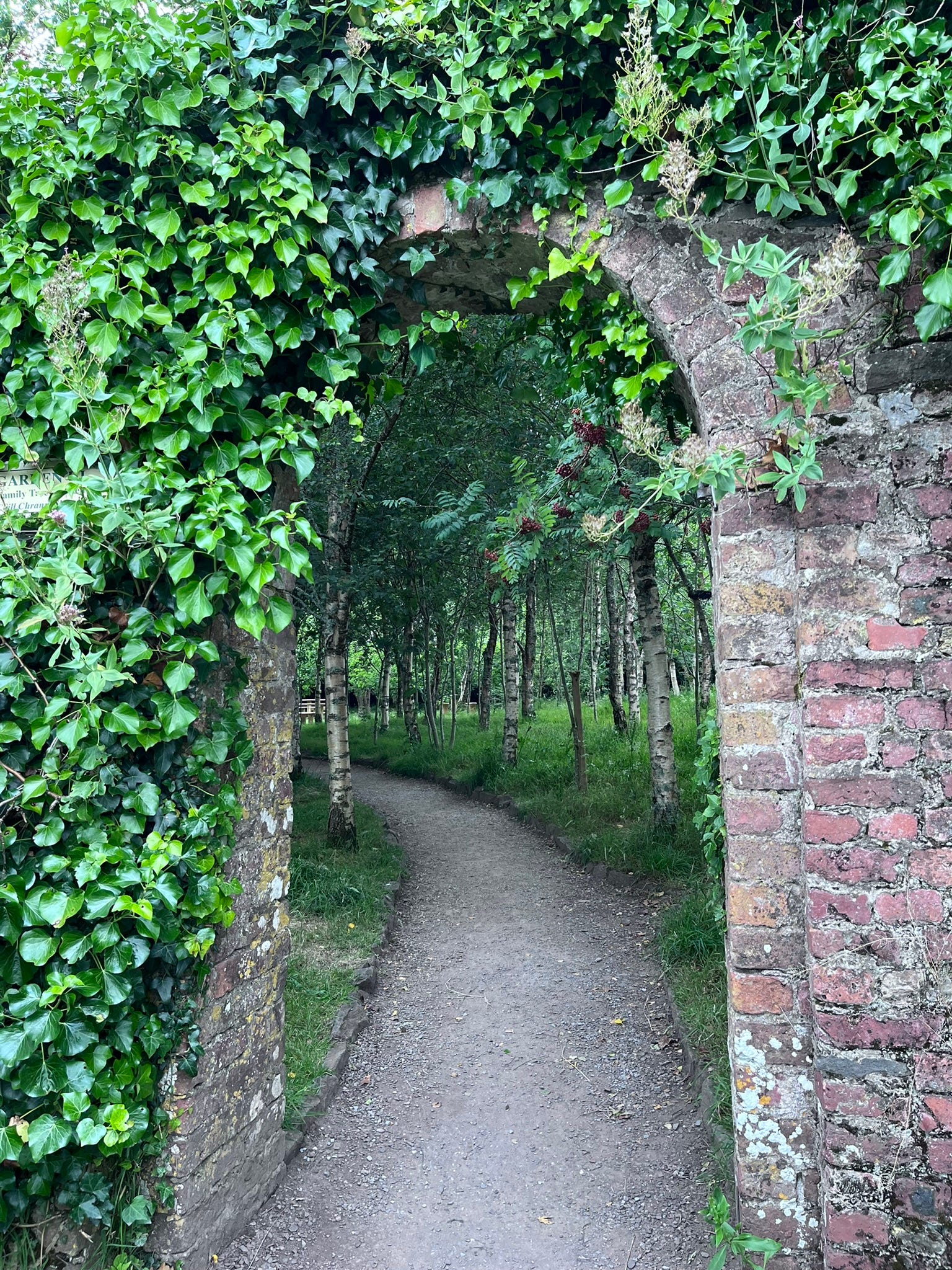
Tóg go bóg é. (Take it easy—literally in Irish, “Take it soft.”)
In my last essay (Beauty and Flourishing), I explored how the most common way to say “Happy New Year” in Irish actually means happy “re-year.” “RE-year” is more like a renewal and a “reboot.” What would you like to do again this year—renew, revive or revisit? For me, I look for what brings me alive. What lifts me up—literally, in my body? What gives me energy? What opens my heart and calms my nervous system? These qualities I value—especially in these turbulent times. For me, this is how my body responds to learning and speaking Irish: with openness, curiosity and delight.
The tongue
There is a specific word in Irish for the Irish language (Gaeilge). Yet Irish speakers also refer to it as an teanga (the language). Clearly an Irish speaking view of the world, “the language” suggests there is no other language—at least one that matters. It also speaks to care and respect, even affection. It’s not any language we’re talking about—it’s the language. (Note, in context, an teanga can refer to other languages; yet when an teanga is used in a general sense, I find it references the Irish language.) In contrast, there’s no proper word for the English language in Irish. An English person is duine Sasanach. The geographic place “England” is Sasana (also from Old Irish for “Saxons”). Yet the word for the English language is Béarla. Why so different? It breaks a common pattern, where the word for a language matches its place name: German/Germany, English/England, French/France, etc. There’s a similar pattern in Irish: Gearmánach/An Ghearmáin, Fraincis/An Fhrainc, except when it comes to “English.” Another exception: in Irish, all words for languages are feminine; English is the only one masculine.
Originally, English was referred to as Béarla gallda (“foreign speech”), and then shortened to béarla (which came to mean speech, language, cant or jargon). For the Irish, hearing English in Ireland, it was foreign speech. More, a native speaker from Kerry told me that Béarla means “bureaucratic” or “administrative language”—almost like meaningless words (“blah, blah, blah”). This makes sense given the history of colonialism in Ireland. When English was spoken—and had to be spoken—it was when with dealing with authorities, the powers-that-be. To Irish speaking ears, it did sound like “blah, blah, blah.” It wasn’t beautiful or musical or nuanced; it was noise. This language wasn’t connected to a place or the land because the people speaking it weren’t in their own place; they were speaking their “blah, blah, blah” in Ireland—where the Gaels were speaking Gaeilge. That the Irish language is lovingly referred to as an teanga (“the language”) and English as administrative garbly-gook (and a masculine rather than feminine noun), sums up the history of British colonialism in Ireland.
Tír gan teanga, tír gan anam. —A country without a language is a country without a soul.
In indigenous Irish culture, there was an awareness of how all the world is alive—every tree, rock, waterway, boat and tool. (See A World Pulsing with Life). So it also makes sense that in Irish, the word teanga has a double meaning, of “tongue” and “language.” In English (and other languages) we can reference someone’s “ tongue” as a synonym for language (as in “native tongue”). Yet in Irish, it’s not separate words. Depending on context, teanga can be the tongue in your mouth or a language (you speak); when it’s an teanga, the language/tongue, it’s the Irish language. For me, this makes language visceral—especially Gaeilge (given it’s the tongue). It brings language—and Irish—back to our bodies. There’s an intimacy and familiarity to it. Also a living quality (teanga bheo—a living language). When we are speaking, we are moving and using our tongues. We can’t speak otherwise. Tongues are alive—like words, and trees.
Each language, as embodying the soul of its culture and people, is also alive. It holds the people’s history, their consciousness. It connects them to their place and land, the work they do each day, the animals, plants and weather they live with/in, interact with and depend on. It expresses a particular way of being in the world. When it’s your primary tongue, it’s the air you breathe; just like your own consciousness, it’s just there—taken for granted. Yet it holds a DNA of who we are and who we’re becoming. It informs and impacts the way we see the world and relate to it. It leaves its fingerprint—even if we don’t look for it or see it.
Words matter. It’s why I first fell in love with reading, books, and poetry. It’s why, as a young adult, I became passionate about classical rhetoric and rhetorical theory (which, if still taught today, democracy would be more robust). It’s why I taught Nonviolent Communication for years. Words matter. They shape our world and, through beauty and delight, keep us alive. The recent inauguration of New York Mayor Zohran Mamdani was inspiring; one of the sweetest moments was hearing Lucy Dacus sing Bread and Roses. As that old women’s suffrage anthem reminds us, we need to eat and have clothes on our backs. Yet we don’t live by bread alone. We need beauty, joy and delight—meaning and connection too. (All the human needs.) This is what I aspire to bring you through The Gaelic Effect—new ways of seeing and being, new possibilities, and also beauty, magic and joy.
“It’s not just that you’re learning Irish. It’s that Irish is learning you.” —Bayo Akomolofe
Portal to an teanga
Each month, people ask me about resources to learn Irish. Clearly, I’m not the only one called to an teanga. Others also feel joy and delight in her. Want to learn some yourself? As long promised, here are some resources.
First, a few disclaimers. I’m a language nerd. In addition to a background in the theory of English grammar and applied linguistics, I also completed training in teaching English as a second language at Princeton University’s Princeton-in-Asia program. So I’ve opinions about methodology. The only social media I regularly use is Substack and Youtube, so I may be missing resources on other platforms. I’ve not researched this; rather, it’s my own organic journey. See GAEL-stack for Irish language resources on Substack. More to add? Please post in the comments below!
Online —or in person?
In many places now (including outside Ireland), there are locally available, in-person courses. I’d start there if you can, especially if using the Direct Language (or “Natural”) method. In my opinion, this is the most effective and engaging for speaking and understanding a language. Some people don’t understand what it is (I’ve seen misinformation about it on Quora for example); it’s more work for the teacher than a grammar-translation approach—I know first hand as someone who taught English as a second language for years. If you can find it, where the teacher’s trained in the methodology and actively uses it, it’s gold.
Diving in —online courses:
Irish with Mollie: Mollie and I think about the Irish language in very similar ways (hear the two of us together on episode #28 of her podcast). She also offers the most comprehensive and interactive online programming I’ve seen—blending self-paced video courses with online conversation groups and community forums. She’s generous (offering much of her resources for free, including a newsletter in Irish and English with audio and a taster course—sign up on her website), plus is infectiously enthusiastic and brings years of experience to her teaching. I also recommend her book, The Gaeilge Guide.
Scoil Scairte: I have a “bromance” with Kathy Scott and all that she produces at The Trailblazery, where she blends Irish culture, language and Irish/land-based spirituality, engaging some of the most compelling artists, writers and thinkers in the world today. Scoil Scairte (hedge school) introduces you to Irish via live, online lessons and conversation groups, blended with meditation, music, storytelling, and other arts. Get a taste of its magic through this video:
Buntús Cainte-Beginner Irish (FREE): I love hearing the native Irish accents (Munster dialect) with multiple voices. Goes step by step—start as a beginner or jump in at a higher level. Get a copy of the book—the illustrations are dated but fun. If you can’t, don’t worry—the online course works fine on its own. Similar to DuoLingo in some ways (you can track your progress and compete with others) it’s so much better—and free.
No DuoLingo! Níl, no, I am not a DuoLingo fan. I used it for years before realizing it was wasting my time. They’re using a grammar-translation approach, but there’s no easy way to access grammar explanations. Their newer, AI generated voices butcher the language (to my ears, the male voice sounds like someone with a Spanish accent trying to speak Irish). More, much of what they’re teaching is completely useless. One of the sentences repeatedly in my course was, Itheann an tíogar na héadaí (The tiger eats the clothes). Tigers don’t eat clothes and there are no tigers in Ireland (except at the zú). How do I introduce myself, order food in a restaurant, or complain about the weather (a crucial skill in Ireland)? You may never find out on DuoLingo.
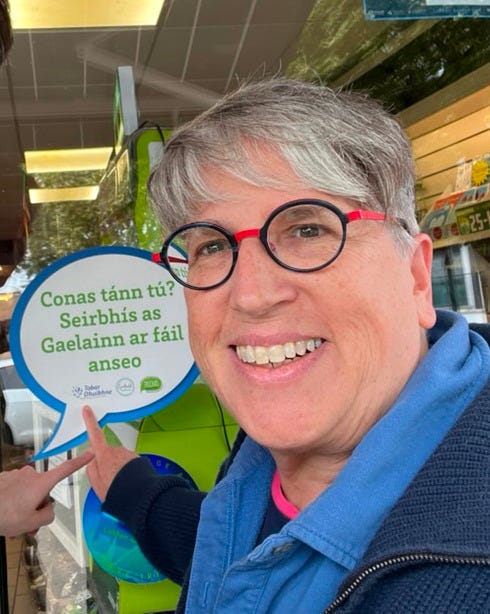
Bursts of Irish (YouTube)
Learn Irish Dane Tyghe, an múinteoir anseo (the teacher here), is great at breaking down grammar concepts, building on them (how one word appears in various phrases and constructions), and includes helpful and engaging graphics. I also like how he makes connections between different skill sets (when teaching phrases using a preposition, he reviews how to conjugate that preposition). He also by the way has a great channel on passing the Irish driving test—he’s just as delightfully methodical, opinionated, and thorough there.
Gaeilge i Mo Chroí Molly—like Mollie above—also has a book out and is active on multiple platforms. If you want to learn the Ulster dialect, she’s especially a great resource. What I like most is where she has everyday conversations with different people, including Dane (above). Put the captions on so it’s easier to follow.
Bitesize Irish offers various resources including online courses (which I’ve not done so can’t comment on). I enjoy many of their videos on Youtube (especially with Ben) and free resources on their website, including a guide with audio files to common phrases. A good place to start, especially if you want to learn cúpla focal (a few words) and how to say “Happy St. Patrick’s Day” as Gaeilge (in Irish).
Other Resources
Word a Day ( a free resource provided by Transparent Language) sends you a new word everyday with audio links, first on its own, then a sentence. I like to review by hitting the back or forward buttons.
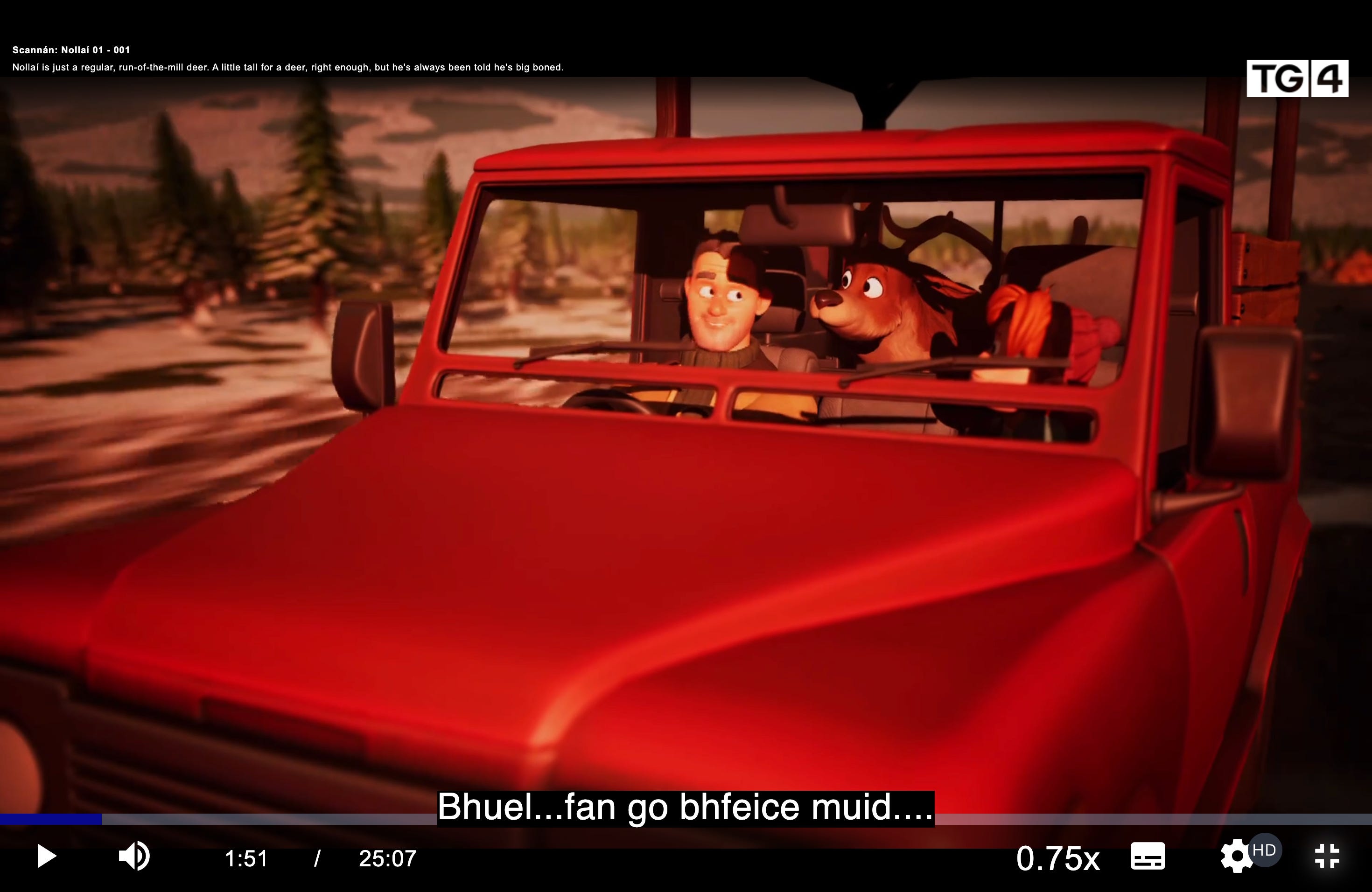
TG4, Irish language public service television, offers a range of programming. A new series, Saol Ella (Ella’s Life) with teenage characters, offers lots of idiomatic Irish. Google translate isn’t always reliable, but I use the camera function on my phone to translate the Irish captions into English when I get stuck. (Just put Google translate into camera mode on your phone, pause the video, hold your phone up to the screen—instant translation!) You can also slow the video down in the settings. Want something easier? Try Nollaí, a short children’s video also with captions.
Ready for more of a challenge? Friend and Gaelic Effect supporter Josephine (who now also is writing her own blog in Irish and English, Kind of a Cure) highly recommends Listen Up Irish, where you learn through reading a novel with audio support. The reader, a native speaker of Irish, has a lovely voice. She also recommends DCU’s online courses (all free). Check out her longer list of Irish language resources.
I hope the above is inspiring. Let me know how it goes in the comments below. I hope you find an teanga as beautiful, enchanting and life-changing as I have.
Beir bua (victory and succes to you),
Dian (i mBaile Átha Cliath—in Dublin)
P.S. Do you write a Substack about Irish history, language or culture? Are there ones you especially love? I am updating Gaelstack. Send me your recommendations!
Or support The Gaelic Effect and its mission by “buying me a cup of coffee” —making a one-time donation anseo (clicking here).


Absolutely brilliant how teanga collapses language into the physicl organ itself. That etymological fold makes speaking inherently embodied, not just symbolic or abstract. I've noticed in code-switching contexts how different langauges literally change the mouth's muscle memory and rhythm. Dunno if Béarla as "blah blah" was intentional historical shade or just how colonial bureaucracy sounded to Gaeilgeoirs, but either way it's perfect.
Thanks for the resources. I've been on duo lingo for a few months and ugggh i don't see me ever becoming fluent with this system.