
The In-Between Spaces
the life of Manchán Magan

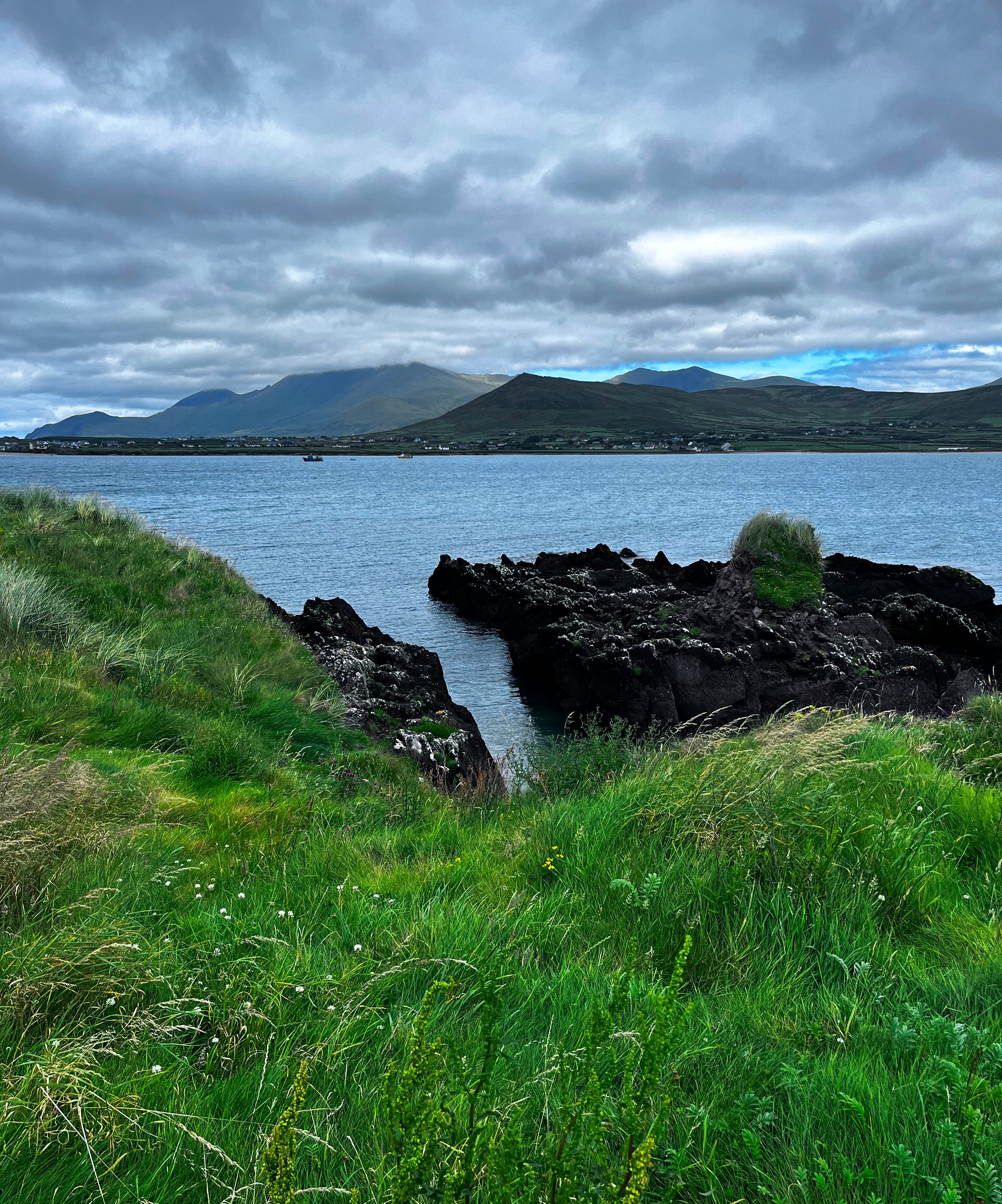
Today I wanted to focus on words to do with in-between-spaces—what in English might be called the supernatural. There’s an abundance of these words in Irish (more than thirty-two for sure and perhaps even a hundred—with a shout out to you, Manchán Magan). Very specific, they often describe in one word what you would need a paragraph to explain. Manchán cites many of these words. If he’d lived longer, maybe he’d have written a book about the alltar, the other realm. Yet on some level, all his work is about this: the interplay between the two worlds—with the Irish language, the portal.
Manchán himself explained the distinction between ceantar and alltar:
“Ceantar means place, region or locality, while alltar is its opposite: the other realm, the netherworld. In the Irish mindset the ceantar is closely shadowed by the alltar. They exist simultaneously, in all places, at all times. Our physical bodies occupy the ceantar but our minds can easily slip into the alltar. This idea that there were different levels beneath and between what we could see was once so widely accepted that it didn’t even deserve mentioning, but nowadays the word alltar has almost disappeared.” (Thirty-Two Words for Field, p. 32)
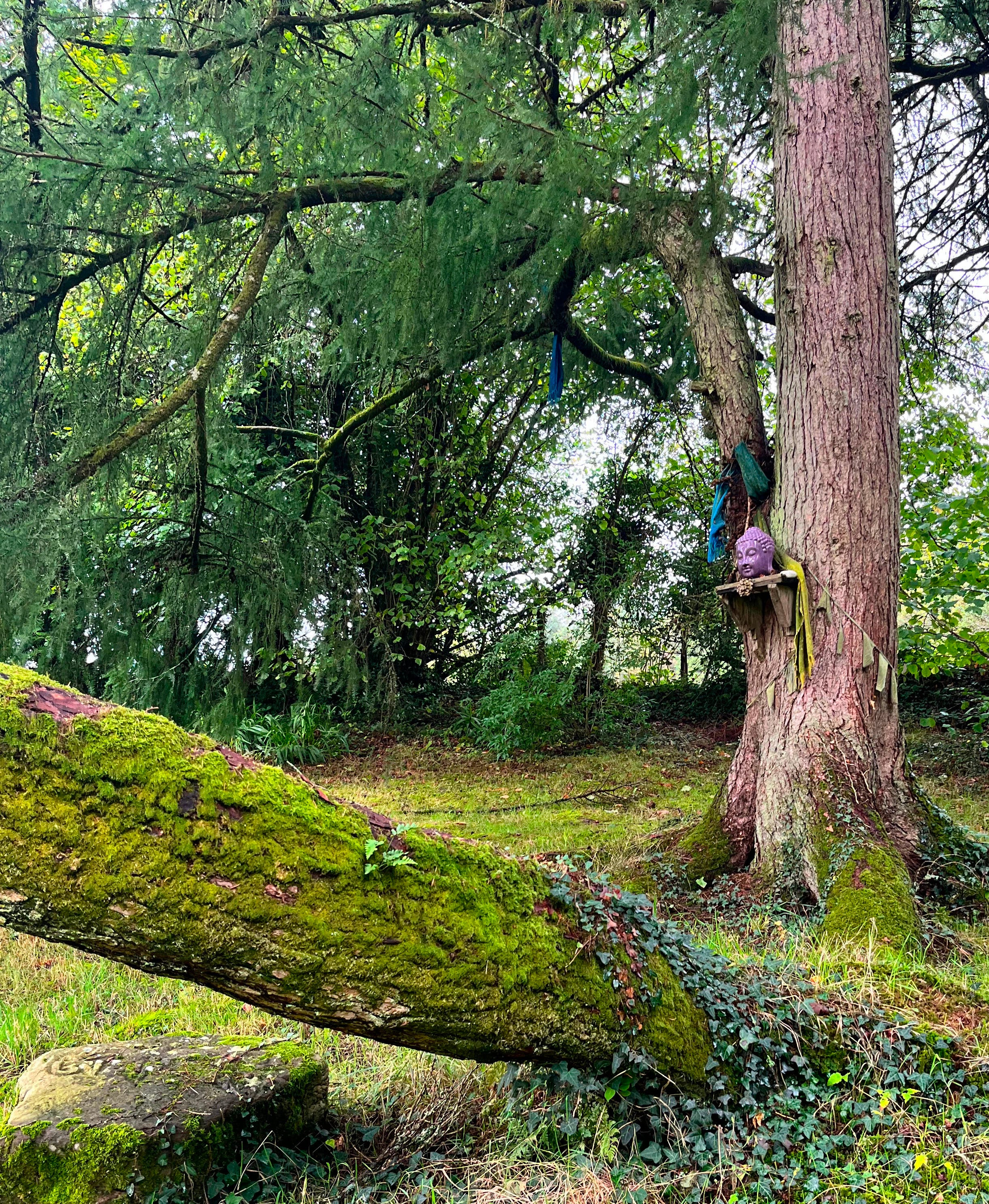
For Manchán, Irish place names were direct routes to the alltar:
“Maybe the best way to understand place names is to see them as thresholds—as portals through which you can access other eras or access the Otherworld that was always only a thin veil away. Just as a place name represents an opening into a wormhole of insights into the history, archaeology, landscape and fauna of an area, they also lead us through to the world beyond, from which everything initially emerged.” Thirty-Two Words for Field, p. 157
Specific places, and their names, are wormholes into other realms. Holy wells, fairy forts and bushes, among other places, are all portals in Celtic culture. The popular series Outlander begins with its heroine Claire falling into another time through some standing stones. In Irish fairy stories, time travel is rare (if it exists at all) but time distortion (where a night becomes a year) is common.
Manchán saw the land itself as a portal (“We shouldn’t underestimate the power of this land as a force of transformation,” Listen to the Land Speak, p. 334) yet he also saw this power inherent in the Irish language herself. The very sounds of Irish and the way Irish words layer and shift meaning, invite in new, more complex and nuanced ways of seeing. Every language has these aspects, thanks to connotation. Yet Manchán showed through numerous examples how this is especially true of Irish. One of the many words he wrote about is siolla (“syllable”) which “also means a glint of sunlight, as if every word is constructed from one or more particles of light” (Thirty-Two Words for Field, p. 293). Another example: adhantach means “apt to kindle” and also “thoughtful,” “lighthearted” and “spirited” (Ibid, p. 295). I am again aware of this long tradition in Ireland of language and its sounds being sacred: in the original alphabet here on the island (Ogham) each letter named for a tree-God; the power of curses and the words of a poet against you, and incantations. I do believe that Irish culture has a sacred relationship to language. Even this word siolla reveals this: that each syllable in a word is, in effect, a particle of light.
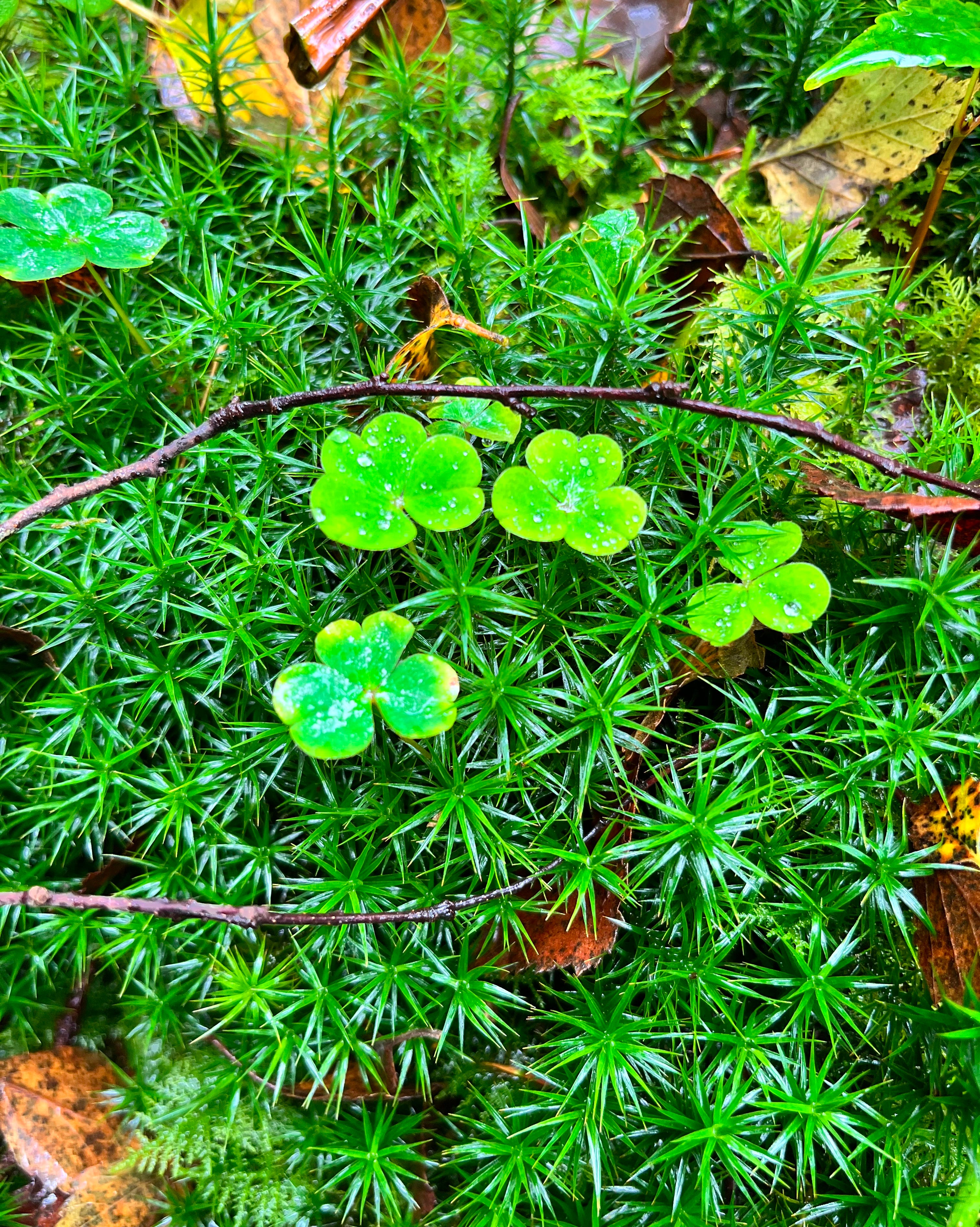
Manchán sought to sustain an teanga (the Irish language) because he saw these connections; like Celtic knot work, the language connects us to the place/land, and the place/land (nature) is a portal to the unseen. In this, he embodied the triple spiral of Celtic spirituality: land/place (nature), the unseen (spirit/the Otherworld) and how both, through language, connect with people. Manchán, by his own assessment, was very much himself in the alltar, the other world. In an interview with RTÉ in September, he spoke about how he was a dreamy child, spending most his days outside with plants and herbs, and still often felt more in the Otherworld than this one. He also said he had no fear of death. The world alltar comes directly from Old Irish essentially unchanged in spelling or meaning over 3,000 years: It meant originally, “the next world, the hereafter; a remote place;” today it means “the far country; the other world, a remote place, or hinterland.” (WikiD)
At Manchán’s funeral service, Fr. Tom Casey spoke about Manchán’s connection to land and spirit:
“He was a gatherer of light-drawing wisdom not just from parchment and archive but from the living word from listening to the voice and the glory of the land itself. He listened to the whisper of bees, to the murmur of bog and oak, to the laughter of hens, and the quiet knowing of pigs. He lived in conversation with creation. He found wonder everywhere. He saw that everything is connected.” [Fr. Casey]
It was even more poignant how Fr. Casey spoke about the fifth province. In the play Cathleen Ni Houlihan, by W.B. Yeats and Lady Gregory, Cathleen laments the loss of her “four green fields”—i.e. the four provinces of Ireland. But as Fr. Casey pointed out, the word “province” in Irish (cúige) means a “fifth.” Historically, the fifth province, Mide (from Middle Irish, meaning “middle or center”) was an actual place, later becoming Meath and West Meath (now part of Leinster). This fifth province is considered both the administrative and spiritual center of Ireland. It’s here, at the Hill of Tara, where you can see more than half the counties of Ireland on a clear day; it’s here where the High Kings sat, and laws were passed. A dinnseanchas poem (giving lore of place) in Old Irish sums it up:
“The last kingdom, [… is ] the kingdom of Kingship, of stewardship, of bounty in government; in Meath lies the Hill of Tara, the traditional seat of the High King of Ireland. The ancient earthwork of Tara is called Rath na Ríthe (’Ringfort of the Kings’).” —Ard Ruide
The Hill of Uisneacht, also nearby, is considered the spiritual center of Ireland. “In Irish mythology it is deemed to be the symbolic and sacred centre of the island. […] the burial place of the mythical Tuatha Dé Danann, and a place of assembly associated with the druids and the festival of Bealtaine.” (Wiki) Each year at Beltaine (marking the start of summer), a huge fire was lit there; in recent years, this practice began again (in fact, it was Manchán who lit the fire in 2024). There is deep metaphysical significance here: “there is more to Mide than just simple geometry... Mide, the notional centre of Ireland, was conceived as a point where an umbilical cord attached the country to the womb of the gods, who endlessly created and sustained its existence from above and below.” (Michael Dames)
As Fr. Casey continued, in the context of Manchán’s life:
“There is they say a fifth province in Ireland […] It’s not found in any map. […] It’s not found by compass. It’s not found by boundary stone. It lies in the realm of the heart, in the place of spirit and imagination. It’s a place that can’t be conquered or divided. It’s really the Ireland of the soul. It’s a province where the Irish tongue rises again, not only in word but in way. A way shaped by thirty-two words for field and ninety-nine words for rain plus one for sun. A way shaped by story and silence by wonder and belonging. […] It’s alive in the spirit of those who awaken to wonder. […] it’s a realm that lies between the visible and the invisible, between the old language and the new world. And Manchán opened that fifth province for us. He pointed to a doorway that many of us didn’t even know was there. And he invited us gently, lovingly, laughingly to step through.” [Fr. Casey]
It’s at this place, at the Hill of Uisneacht (that comes, scholars believe, from the Proto-Celtic meaning “place of the hearth” or ‘place of cinders” (WikiD), where Manchán’s ashes will be spread.
“…we’re we’re still having to learn how to occupy these new realms that we find ourselves in.” —Manchán Magan
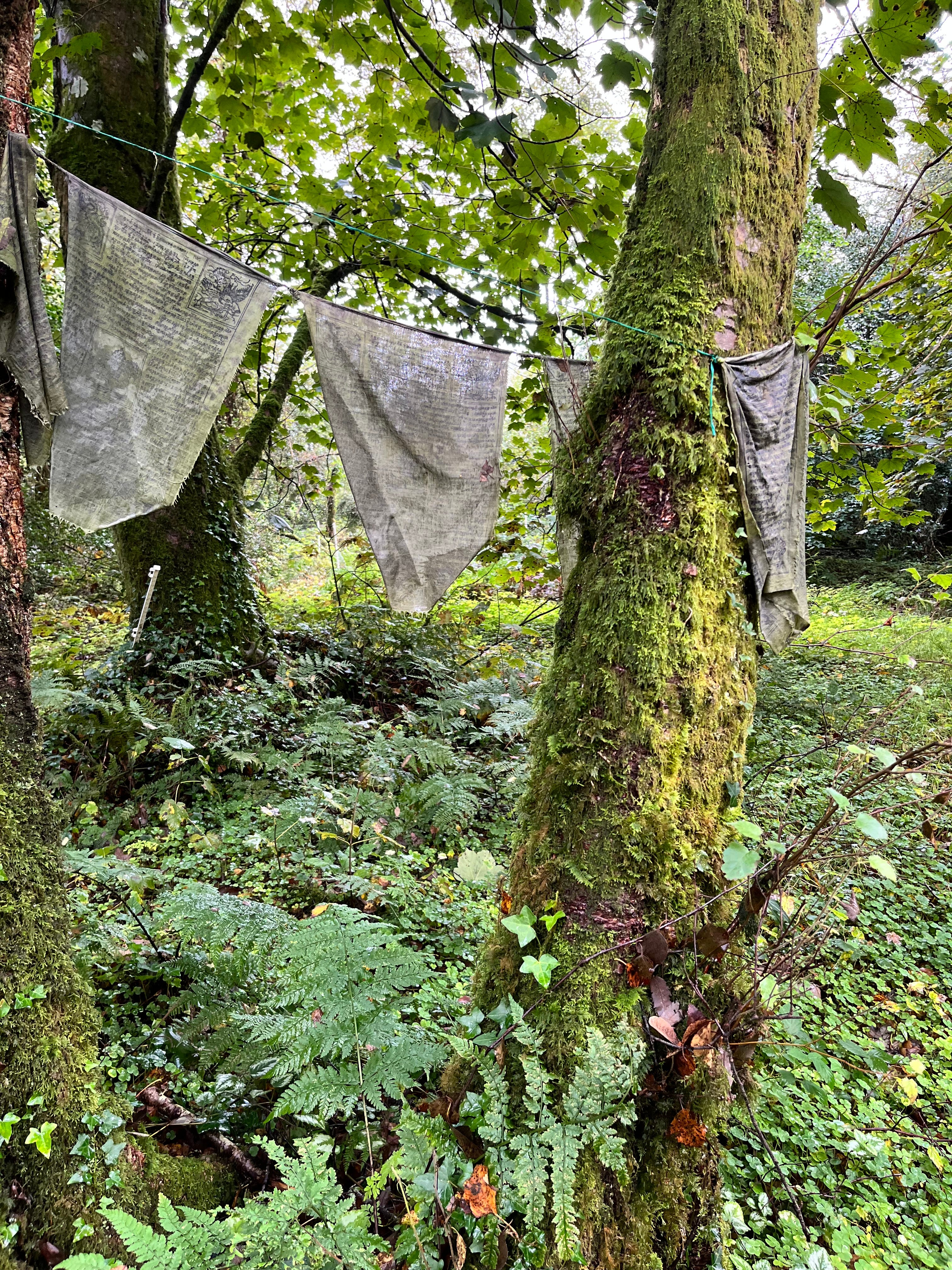
I had wanted to focus today on the words of in-between spaces, that space beyond what the Irish consider a thin veil. But all week my thoughts have been with Manchán. I still can’t believe he’s “gone”—at least from this realm. I still think I’ll see him again at his next book signing, or The Fumbally, or at Scoil Scairte with Kathy Scott. Yet I know the only place I can see him now is in the alltar. Again, safe passage, mo chara (my friend), Manchán. You were a true St. Brendan for our times, traveling the world both seen and unseen—and opening those worlds up for all of us to explore.
Sending this with gratitude and warm wishes to you all, and a tender heart,
Dian (i mBaile Átha Cliath—in Dublin)
P.S. Our next Clachan Beo where paying subscribers get to meet together and explore concepts in The Gaelic Effect, is Sunday, October 26th at 7pm IST (3pm EST). The topic is embodying a living world and uncertainty. A Zoom link will be sent out a few days before with points to “stir the pot.” There will also be a raffle that day for a gift copy of Mollie’s new book, The Gaeilge Guide—signed by Mollie and myself. Just upgrade to paying subscriber by the 25th, and bígí linn (join us)!
Also, come learn how to listen to the unseen and unheard in our own, individual ecosystems through Somatic-Based-Empathy, December 5th-7th, in Hamburg. Paying subscribers of The Gaelic Effect get 50 Euro off. Learn more and register here.
P.S.S. Want to pronounce the Irish words in today’s essay? Go to Abair.ie and choose your dialect of choice.
You can also support The Gaelic Effect and its mission by making a one-time donation by clicking anseo (here).


I wasn't familiar with Manchán Magan, and I certainly didn't know he had passed. Thanks to this I looked for his books and found only one available copy of "Listen to the Land Speak" (it is a used hardback copy) and I snapped it up - can't wait to read it. Sometimes it is difficult to find certain books in the US. In case you are interested, and if it is a bit macabre I apologize, but because I searched for interviews with him, his funeral popped up in my Youtube feed. So, I've met a man, his work, and his funeral all in the same day and I have been enriched by it all. Lovely post, thank you.
https://www.youtube.com/watch?v=G8--NndgKXs
This was beautiful. It resonated a lot. Both the way land speaks and what it is to lose someone so dear who helps you see the world in life changing ways. I will be sure to look for Magan’s work. ❤️